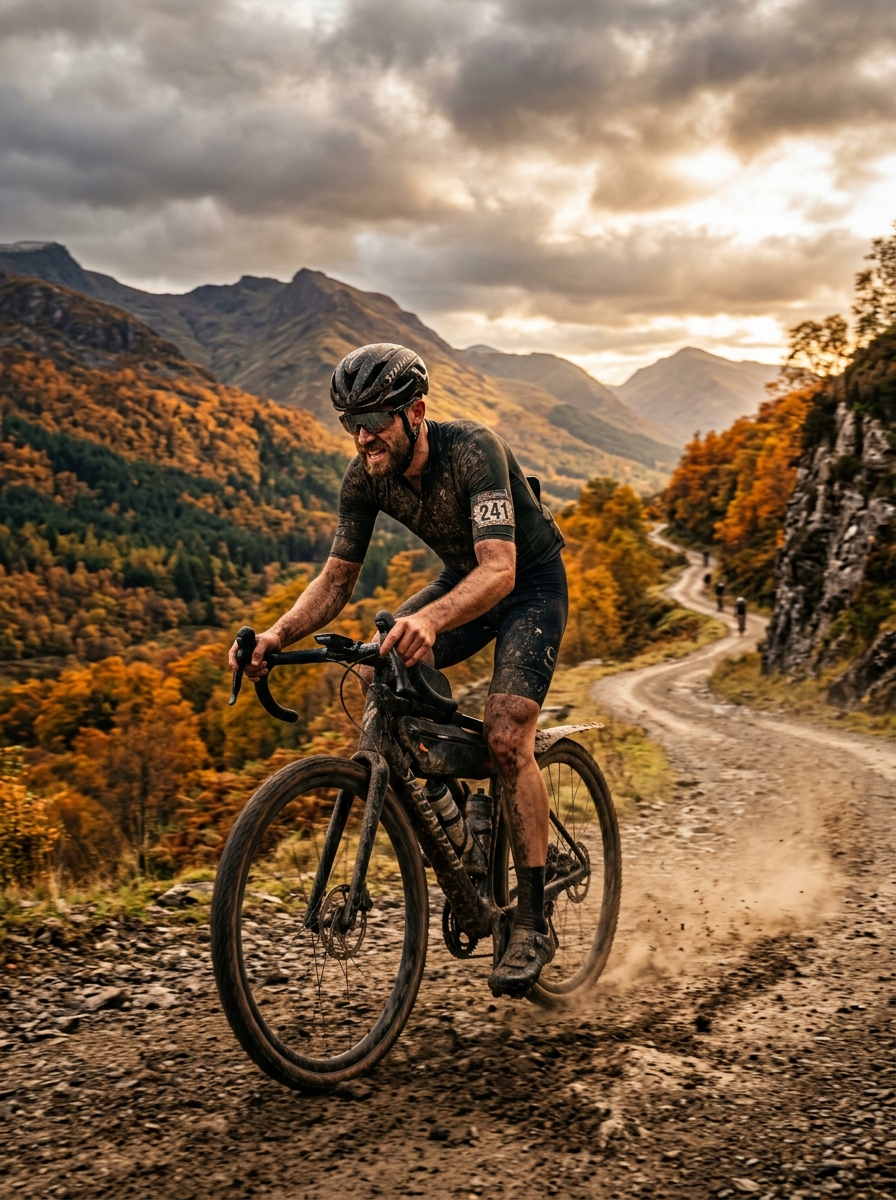
Gravel Century Magazine Q4 2026 Cover
Q4 2026 • VOL. 7, NO. 4 AUTUMN / WINTER EDITION GRAVELCENTURY.COM

GRAVEL CENTURY

Explore • Endure • Ride • Est. 2018
2026 Landmark Investigation

THE FRONTIER OF 100 MILES

How modern gravel technology, 50mm rubber, and unpaved grit revolutionized the century challenge.

COURSE RECON

The 10 Most Brutal Gravel Centuries of 2026

2026 RIG TEARDOWN

13-Speed Wireless, Active Dampers & Aero Bags

ENDURANCE FUELING

The 100g Carb Blueprint for 8-Hour Dirt Epics

RIDER DISPATCHES

Mid South Red Mud to High Alpine Blizzards

Gravel Century Magazine Q4 2026 • Vol. 7, No. 4 Contents & Editorial

OCTOBER 2026

Letter from the Editor

Past the Pavement, Where Truth Resides

When we launched Gravel Century Magazine in 2018, riding 100 continuous miles on unpaved dirt was viewed as an eccentric test of endurance reserved for masochists in flannel shirts. Paved cycling still dominated the cycling psyche, where speed was calculated in aerodynamics and races were won in pack drafts.

Eight years later, in the autumn of 2026, the landscape has completely overturned. The unpaved century is now universally recognized as cycling's ultimate crucible. When you cross mile 70 on washboard gravel with 3,000 feet of loose climbing remaining, there is no peloton to hide behind. It is just your cadence, your tire pressure, and your mental fortitude.

In this Q4 2026 edition, we celebrate the machines, the fuel, and the remarkable riders who define this unpaved era. Keep your tire pressure low and your gaze on the horizon.

G. Vance Sterling
Editor-in-Chief • Boulder, Colorado
GRAVEL CENTURY MAGAZINE
Official unpaved endurance publication • Published at gravelcentury.com
Editorial & Cartography partner: CenturyRides.org
Featured Dossiers

The Frontier of 100 Miles: The 2026 Century Revolution

How wide rubber, electronic shifting, and grit redefined modern cycling.

03

Course Recon: The 10 Most Brutal Gravel Centuries

Elevation profiles, flint rock warnings, and route guides across North America.

05

2026 Rig Teardown: 10 Essential Equipment Upgrades

13-speed wireless transmission, micro-dampers, and 50mm tire clearance.

07
Physiology & Training

The 100g Carb Revolution: Fueling the 8-Hour Dirt Epic

Glucose-to-fructose ratios and avoiding hour-six metabolic catastrophe.

09

Pacing Loose Shale & Dirt Cadence Economy

Zone-2 discipline when 14% gravel grades tempt you to surge.

10
Culture & Exploration

Frontline Dispatches: Four Riders on Mud & Grit

Firsthand accounts from Oklahoma peanut butter clay to alpine hailstorms.

11

CenturyRides.org 2026–2027 Calendar & Route Guide

Planning your season using North America's premier verified ride directory.
13
Feature Dossier The 2026 Century Revolution Volume 7 • Issue 4
Endurance Chronicle • Feature Report

THE FRONTIER OF 100 MILES

Eight years after the unpaved boom ignited, the 100-mile dirt test has matured into cycling's purest athletic crucible. Here is how modern gear, brutal courses, and self-reliance reshaped the sport in 2026.

At 6:15 AM on a frost-bitten October morning in the high plains of eastern Oregon, four hundred riders stood shivering in the dark. Their breath plumed into the cold mountain air like steam from locomotive pistons. Underneath them were drop-bar bicycles equipped with tires wider than those ridden by cross-country mountain bikers in the 1990s. Ahead lay one hundred and four miles of unmaintained forestry track, volcanic shale, and 8,400 feet of unrelenting elevation.

Nobody was complaining about the cold. Nobody was asking if there would be neutral rollouts or team cars. In 2026, everyone on this start line understands the unspoken bargain of the gravel century: once you cross the timing mat, the only guarantee is the dirt under your wheels.

"On smooth asphalt, speed is a mathematical equation. On unpaved gravel, speed is an act of negotiation with terrain that does not care about your power meter."

The transformation of the 100-mile cycling event over the past decade represents the most significant cultural migration in modern sporting history. In the early 2010s, a "century" was almost universally a charity road ride—orderly pacelines navigating county highways, stopping every twenty miles for sliced oranges and sports drink powder.

Today, the gravel century has replaced the marathon and Ironman triathlon as the defining endurance benchmark for the modern athlete. The reasons are both mechanical and spiritual. On open roads, riders faced increasing motor vehicle congestion, distracted drivers, and the clinical sterility of watt-obsessed group rides.

Gravel offered an escape route. It took cyclists deep into national forests, Bureau of Land Management reserves, and forgotten farm corridors where you can pedal for three hours without seeing a single car or telephone pole.

+340% GROWTH

Participation in unpaved 100-mile events has surged over 340% since 2018, with gravel now comprising 44% of all century rides indexed on CenturyRides.org.

"When you finish a gravel century, you don't talk about your average speed or normalized power," explains race director Sam Caldwell. "You talk about surviving the loose descent at mile 45, the mechanical you fixed with zip-ties, and the sandwich you ate at mile 80 that tasted like salvation."

Yet the 2026 gravel century is no longer merely an exercise in survivalism. It has spurred a golden age of engineering, from 13-speed wireless cassettes with 520% gear ranges to integrated stem micro-dampers that save watt-robbing arm fatigue.

Feature Dossier The 2026 Century Revolution Volume 7 • Issue 4
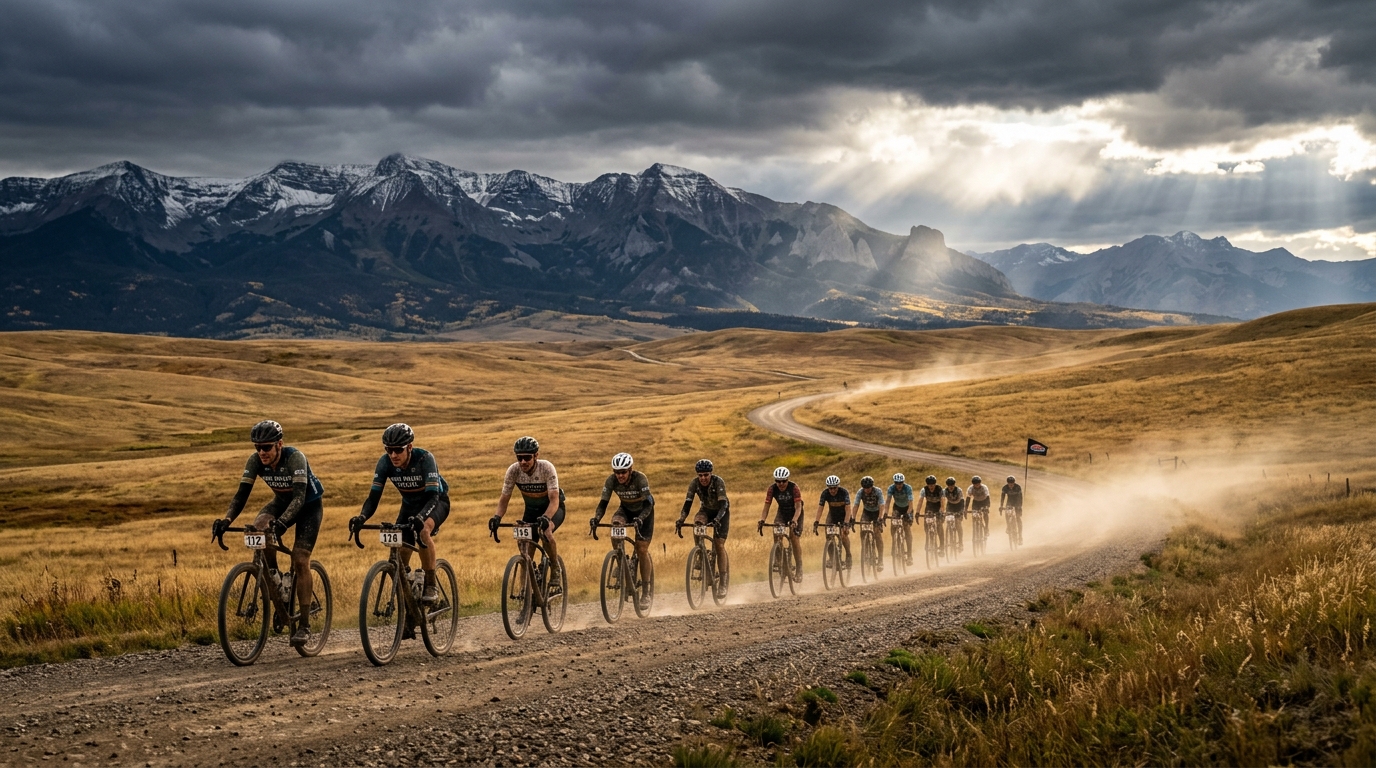
Gravel Century Peloton across golden foothills
The morning peloton strings out across the golden prairie of the Flint Hills. Hour two, mile 28.
The Aerodynamics of Dirt

In 2026, gravel racing experienced its own aerodynamic awakening. While traditionalists once resisted wind-tunnel optimization, riders quickly realized that in 100-mile events where headwinds often howl across open prairies at 25 mph, aerodynamic drag accounts for over 70% of total resistance.

The result is a new generation of gravel race geometry: cockpits with 20-degree flared drops that allow riders to tuck into an aggressive aerodynamic posture on flat windswept sections while retaining wide leverage on rocky descents.

Self-Reliance as High Art

Unlike European road racing, where team mechanics hang out of car windows with replacement wheels, the core tenet of the gravel century remains strictly self-supported. If you slice a sidewall on razor-sharp Kansas flint at mile 64, your race continues only if you have the plugs, dynaplug darts, CO2, or TPU tubes to fix it yourself.

This ethos has bred a community of riders who are as proficient with a torque wrench and chain breaker as they are with a power meter. It is cycling stripped of pretension, where masters athletes and elite pro racers line up on the exact same dirt road.

"A gravel century does not ask who you are in your day job. It asks how you respond when your legs are empty, the sun is setting, and you still have twenty-two miles of loose dirt to conquer."
The Next Horizon

As we look into 2027 and beyond, the frontier continues to expand. Organizers are connecting multi-county dirt trails into point-to-point odysseys, while directories like CenturyRides.org allow riders anywhere in the country to filter events by surface roughness and elevation severity.

The 100-mile dirt ride is no longer a temporary fad. It is the defining signature of twenty-first-century cycling.

Course Reconnaissance North America's Toughest Centuries Volume 7 • Issue 4
Event Directory • Course Dossier

THE 10 BRUTAL CENTURIES

We surveyed riders, race directors, and elevation data from CenturyRides.org to profile the continent's ten most punishing 100-mile unpaved trials.

1. Flint Hills Gauntlet (Emporia, KS)

102 MI • 6,100 FT

The Threat: Flint rock that shears tire casings like razor blades, unrelenting prairie headwinds, and midday heat reaching 95°F. Run 45mm reinforced casings and double sealant.

2. Red Clay Trial (Stillwater, OK)

101 MI • 4,800 FT

The Threat: Oklahoma red dirt that turns into wheel-stopping peanut butter clay when wet. Frame clearance is paramount; a paint-stirrer stick taped to the top tube is mandatory equipment.

3. Continental Divide Epic (Leadville, CO)

100 MI • 11,400 FT

The Threat: Starts at 10,152 ft and crosses passes at 12,000 ft. Oxygen is scarce, hypothermia is an ever-present risk, and descents on loose scree demand high-volume 50mm rubber.

4. Black Canyon Grind (Sedona, AZ)

104 MI • 7,900 FT

The Threat: Cholla cacti needles, deep sand washes that suck momentum, and brutal high-desert temperature swings from 40°F at dawn to 90°F by hour five.

5. Oregon Timber Ridge (Bend, OR)

100 MI • 8,600 FT

The Threat: Pumice dust, lava rock gardens, and remote Cascade forestry tracks with zero cell reception. Sub-compact 1:1 gearing is essential for 16% cinder climbs.

THE 100-MILE BENCHMARK

Every event profiled on these pages requires verified 100+ continuous unpaved miles. Data verified by CenturyRides.org official ride index.

"People ask us how to prepare for these routes," says endurance coach Marcus Croft. "The physical training is only half the battle. The other half is mastering the logistical choreography: tire plugs within arm's reach, nutrition timed to the minute, and knowing how to remain calm when a derailleur hanger snaps forty miles from civil society."

Course Reconnaissance North America's Toughest Centuries Volume 7 • Issue 4

6. Waffle Ridge Extreme (Cedar City, UT)

106 MI • 9,200 FT

The Threat: Punishing washboard dirt, steep loose switchbacks, and high-altitude winds that break up pacelines within the first twenty miles.

7. Badlands Washout (Rapid City, SD)

103 MI • 5,400 FT

The Threat: Sun-baked gumbo dirt, remote prairie canyons, and zero shade for 70 consecutive miles. Hydration packs with 3L minimum capacity are required.

8. Appalachian Shale Epic (Davis, WV)

100 MI • 10,800 FT

The Threat: Relentless steep pitches reaching 18%, slippery wet shale rock, and dense mountain fog. Demands aggressive tire tread and disc brake rotor cooling.

9. Laurentian Escarpment (Quebec, Canada)

102 MI • 7,500 FT

The Threat: Canadian Shield granite rock, logging roads with thick gravel beds, and brisk autumn temperatures that require full thermal layering.

10. Big Bend Chihuahuan 100 (Terlingua, TX)

100 MI • 6,400 FT

The Threat: Extreme desert isolation along the Mexican border, baby-head rocks, and washboard that vibrates cockpits loose. Satellite SOS trackers mandatory.

Ready to Target Your 2026 Century?

Discover GPS route profiles, verified registration dates, and elevation grades for hundreds of North American gravel events on our companion portal:

Hardware Lab 2026 Component Teardown Volume 7 • Issue 4
Technical Lab Report

MUD, SWEAT, & GEARS II

The 2026 Gravel Century Rig Teardown: 10 essential equipment innovations engineered to survive washboard, loose shale, and eight hours of relentless grit.
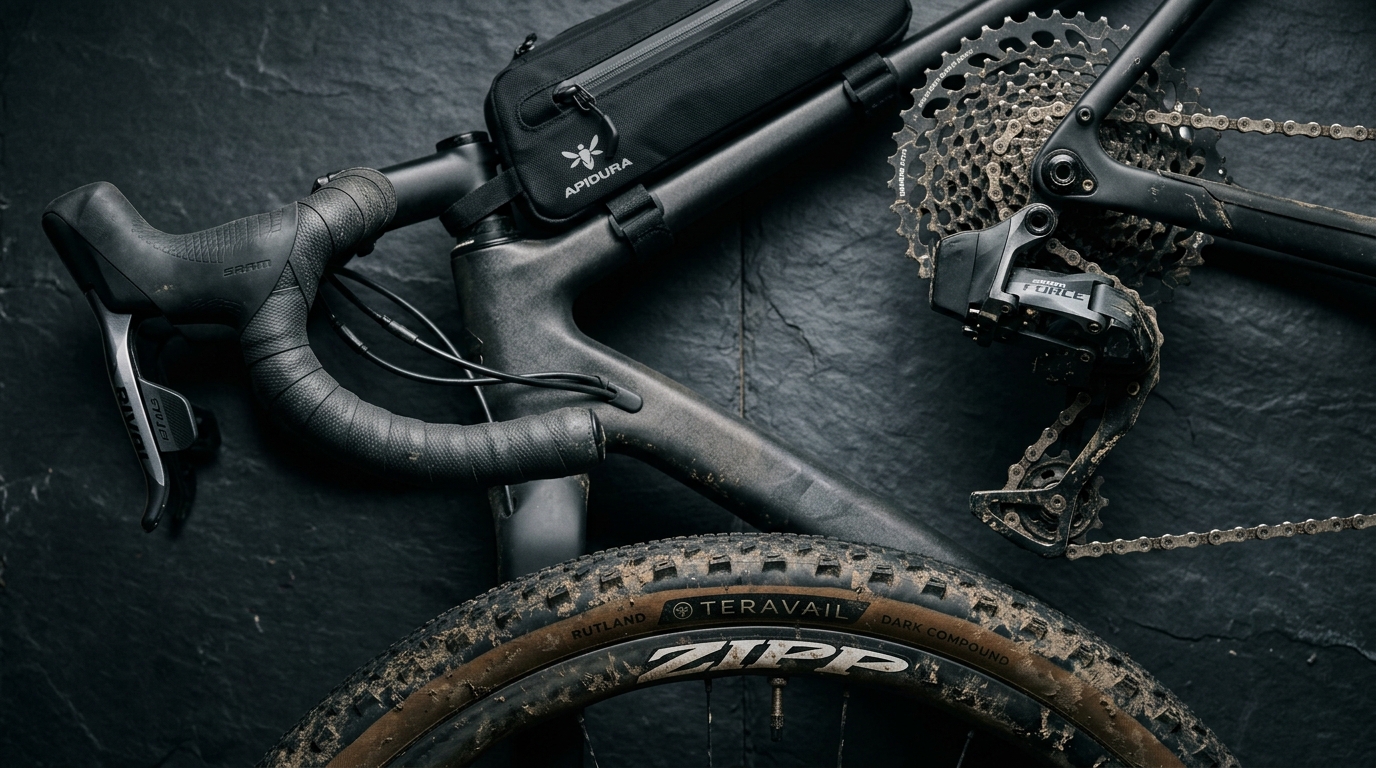
Macro gravel bike component teardown
SRAM Force AXS wireless transmission with massive 10-52T cassette and Teravail 47mm casing.

Tackling a 100-mile unpaved route on standard road components or unmodified stock setups is a recipe for heartbreak. Between relentless road vibrations that loosen stem bolts and tire-slashing flint rocks, equipment failures ruin more century attempts than physical exhaustion.

01
13-Speed Direct-Mount Transmission

Full-mount wireless derailleurs eliminate fragile derailleur hangers. With a 10-52T cassette paired with a 42T chainring, riders gain 520% range for 18% dirt climbs.

02
48–50mm High-Volume Rubber

The tire width debate is settled. 50mm tubeless casings running at 26–30 PSI reduce rolling resistance on rough washboard by 18 watts compared to 40mm tires.

03
Active Elastomer Stem Dampers

Micro-suspension stems delivering 20mm of tunable travel absorb high-frequency road buzz, saving wrist and triceps musculature across seven-hour grinds.

04
20° Flared Carbon Aero Cockpits

Provides a narrow 38cm aero hood position for cutting prairie headwinds, paired with a wide 48cm drop flare for high-speed descending on loose scree.

05
High-Density Tire Foam Inserts

Protects expensive carbon wheel rims against sharp rock strikes while allowing riders to limp home run-flat in the event of an unpluggable sidewall tear.

Hardware Lab 2026 Component Teardown Volume 7 • Issue 4
06
Direct-Mount Magnetic Feed Bags

Bolt-on top-tube bento boxes with one-handed magnetic closures provide immediate access to chews and drink mix packets without fiddling with dirty zippers.

07
BLE Real-Time Pressure Valves

Miniature wireless valve-cap sensors stream live tire pressure to your head unit, alerting you to slow leaks before your rim kisses jagged flint rock.

08
Molten Wax Ceramic Drivetrains

Hot-melt paraffin wax treatments shed dry dust and red clay instead of creating grinding paste. Saves up to 8 watts and preserves chains through wet grime.

09
3D-Printed Honeycomb Saddles

Zonal cushioning tailored specifically for upright endurance postures dampens vibrations through the sit bones, eliminating saddle sores past mile 60.

10
Integrated Axle Multi-Tools

Hollow thru-axles and bar ends now conceal tubeless pluggers, chain breakers, and spare quick-links, freeing jersey pockets for essential calories.

The Cost of Efficiency

Upgrading your rig does not require spending thousands on carbon exotica. Our lab testing confirmed that the two single highest-impact upgrades cost less than $120 total: switching to molten chain wax and dropping tire pressure by 4 PSI to match actual course terrain.

Tire Pressure Formula for 100 Miles

For a 165 lb rider on 48mm tubeless tires: run 26 PSI front and 28 PSI rear for dry hardpack; drop to 23 PSI front and 25 PSI rear if the course features chunky gravel and wet washboard.

Sports Science 100-Mile Fueling Physiology Volume 7 • Issue 4
Endurance Physiology • Sports Science

THE 100G CARB REVOLUTION

Why modern gravel century athletes consume 90 to 120 grams of carbohydrates per hour—and how you can train your gut to avoid the dreaded hour-six shutdown.

For decades, sports nutrition textbooks preached a strict ceiling: the human digestive system could only absorb sixty grams of carbohydrates per hour before suffering catastrophic gastrointestinal distress. Endurance cyclists relied on dilute sports drinks, occasional bananas, and chewed dry energy bars.

In a five-hour road century, that conservative fueling might just squeeze you through. But on an eight-hour gravel epic—where upper-body musculature works continuously to steer through loose rock and power output spikes on steep loose pitches—sixty grams per hour creates an insurmountable caloric deficit of over 4,000 calories.

"When a rider bonks in hour seven of a gravel century, it is rarely muscular fatigue. It is liver and muscle glycogen exhaustion."

The breakthrough came with the discovery of dual-transport carbohydrates: combining glucose and fructose in a 1:0.8 ratio. Because glucose utilizes SGLT1 intestinal transporters while fructose utilizes GLUT5 transporters, the gut can absorb up to 100–120 grams per hour without cramping or nausea.

The Hour-by-Hour Blueprint
HOURS 1 TO 3

Target: 90g carbs / 750ml fluid / 600mg sodium per hour. Start fueling at minute twenty. Your body will feel fresh; do not make the classic rookie mistake of waiting until you feel hungry.

HOURS 4 TO 6

Target: 100g carbs / 800ml fluid / 800mg sodium per hour. Introduce real-food savory snacks (small rice cakes, salted potatoes) to combat palate fatigue from sweet gels.

HOURS 7+ (THE END GAME)

Target: 80g liquid carbs + 50mg caffeine. Chewing becomes difficult as blood is diverted to working legs. Transition to liquid drink mix and caffeinated chews.

Sports Science 100-Mile Fueling Physiology Volume 7 • Issue 4
Pacing Discipline in the Dirt

The primary reason riders fail to finish gravel centuries is not lack of training miles—it is catastrophic over-pacing in the first ninety minutes.

On loose gravel, momentum is deceptive. A short 10% pitch that requires 250 watts on pavement often demands 380 watts on loose shale just to keep the rear tire from spinning out. Riders who jump into early fast pacelines burn through their finite anaerobic matches before mile 30.

"Every match you burn above Functional Threshold Power in the first two hours will cost you five minutes at the finish line."

Strict Zone-2 pacing (65–75% of max heart rate, or 60–70% of FTP) must be maintained on all climbs. Let the rabbits surge ahead; by mile 65, you will pedal past dozens of them sitting beside the gravel road with seized quadriceps.

Electrolytes & Sodium Math

Cramping on a hot unpaved century is almost never caused by potassium or lack of bananas—it is caused by profound sodium deficits and neuromuscular fatigue.

High-output athletes sweat between 800mg and 1,500mg of sodium per liter of perspiration. Plain water or weak hydration drinks dilute serum sodium, leading to hyponatremia and cramping.

SODIUM RULES FOR DIRT

Maintain a minimum of 750mg to 1,000mg of sodium per 750ml bottle on warm days. Supplement with sodium capsules if course temperatures exceed 80°F.

Cadence & Traction

Spinning at 85–92 RPM preserves leg muscles compared to grinding at 65 RPM. On loose climbs, stay seated with your chest low to keep traction on the rear wheel.

Field Dispatches Voices from the Backcountry Volume 7 • Issue 4
First-Person Chronicles

FRONTLINE DISPATCHES

Four unvarnished accounts from amateur and veteran riders who tackled 100-mile trials across North America this season.
Dispatch 1: The Red Mud of Mile 74

The storm hit without warning forty miles east of Enid. Within ten minutes, the hardpacked red clay road morphed into an ungodly soup the locals call "peanut butter."

Bicycle wheels stopped turning. Mud packed into fork crowns and chainstays until tires locked solid. Everyone around me dismounted and began carrying fifty-pound mud-caked bikes on their shoulders.

For six miles, we walked through driving rain. We used tire levers and twigs to scrape clods of mud from our derailleurs. Nobody complained. We laughed until our sides ached, shared chocolate bars, and crossed the finish line in the dark together.

Dispatch 2: Hail on Hagerman Pass

At 11,800 feet, the sky turned the color of bruised plums. The temperature plunged thirty degrees in four minutes. Pea-sized hail began bouncing off my helmet like shrapnel.

With fifteen miles of loose, switchbacked scree between me and the valley floor, my hands were shivering so violently I could barely squeeze the hydraulic brake levers.

I put on every layer in my frame pack, lowered my front tire to 22 PSI for traction, and descended by muscle memory. When I finally reached the highway checkpoint, the race volunteer handed me a cup of warm broth. I broke down and wept with gratitude.

Field Dispatches Voices from the Backcountry Volume 7 • Issue 4
Dispatch 3: The Midnight Lantern Run

Mile 88. The sun had long slipped below the desert bluffs, leaving a sky so saturated with stars that the unpaved road glowed faint silver.

My headlight cast a ninety-lumen cone of light ahead, revealing ocotillo cacti and kangaroo rats darting across the caliche dust. The heat of the day was gone, replaced by crisp 50-degree desert air.

There is a profound silence that settles over a gravel century after dark. Your legs no longer feel heavy; you enter a trance state where your pedal strokes sync with your breathing. It is the closest thing to meditation I have ever found.

Dispatch 4: Why We Keep Coming Back

My friends ask why I spend seven hours on a Sunday torturing myself on washboard dirt roads in Quebec when I could be reading a book on my couch.

I tell them that modern life has sanitized everything. We live in climate-controlled rooms, buy food in plastic wrap, and rarely encounter anything that genuinely challenges our survival instincts.

A gravel century strips all of that away. At mile 80, you discover who you really are when all comfort is removed. You discover that you are stronger, more resilient, and more alive than you ever imagined.

Partner Dossier Official Ride Index Volume 7 • Issue 4
Companion Network Directory

CENTURYRIDES.ORG GUIDE

Your roadmap to 500+ verified North American centuries, gran fondos, and unpaved epics for the 2026–2027 calendar year.

Finding verified, reliable event information for 100-mile gravel rides has historically been a scattered affair of outdated message boards, dead Facebook links, and ambiguous route maps.

That is why Gravel Century Magazine partnered with CenturyRides.org, the definitive North American registry for 100-mile and 100-kilometer endurance cycling events.

500+ VERIFIED RIDES

Every event listed on CenturyRides.org is vetted for verified route data, organizer credentials, aid station support, and elevation profiles.

Whether you want to filter for 80%+ unpaved routes, events with over 8,000 feet of climbing, or spring season tune-up rides, CenturyRides.org provides direct GPS downloads, registration dates, and state-by-state search tools.

Season Planning Framework

1. Base Century (March–April): Choose a rolling event with 60–70% gravel and under 4,000 feet of climbing to test equipment and fueling protocols.

2. Target Century (June–August): Your season peak. Target your landmark endurance goal with 6,000+ feet of vertical gain.

3. Autumn Victory Lap (September–October): Celebrate your fitness on scenic backcountry fall-foliage centuries across the Rockies, Midwest, or Appalachians.

Search Month & State Directory
Visit centuryrides.org/century-rides/ on desktop or mobile to browse verified centuries across all 50 states and Canadian provinces.
Partner Dossier Official Ride Index Volume 7 • Issue 4
The Pre-Ride Logistics Checklist

Two weeks before your target 100-miler:

  • Download Offline GPX Maps: Never rely on cellular data in remote valleys. Sync routes to your head unit and phone.
  • Freshen Tubeless Sealant: Add 2oz of fresh liquid sealant to both tires. Dry sealant won't plug thorns.
  • Inspect Brake Pads: Dirt and mud chew through resin pads. Switch to metallic sintered pads for wet events.
  • Torque Check: Check bottle cage bolts, seatpost clamp, and cockpit with a torque wrench.
Aid Station Strategy

Treat aid stations like Formula 1 pit stops: stop only for water and ice, keep your stoppage under 90 seconds, and eat your calories while rolling.

Submit Your Century Event

Are you a race director or cycling club organizing a verified 100-mile or 100-kilometer gravel ride in 2027?

CenturyRides.org offers free event submission and directory placement for community and competitive cycling centuries across North America.

GET LISTED FOR 2027

Visit centuryrides.org/add-ride.html to submit course elevation profiles, dates, and registration links.

Community Journal The Dirt Dispatch Volume 7 • Issue 4
Reader Community & Subscriptions

THE DIRT DISPATCH

Join over 45,000 endurance gravel riders receiving our weekly curated route files, hardware lab tests, and digital issue briefings.
Weekly Editorial Deliveries

Every Friday morning, our editorial team sends The Dirt Dispatch—a concise, zero-fluff briefing featuring:

  • Route of the Week: Curated 100-mile GPS route file with surface notes and water stops.
  • Lab Teardowns: Real-world component longevity reports after 500+ miles of gravel testing.
  • Registration Alerts: Notice when high-demand century lotteries open.
  • Exclusive Essays: Dispatches from our field contributors.

Subscribe for free at gravelcentury.com#newsletter.

Call for Field Contributors

Do you have a compelling story from a backcountry unpaved century? Have you scouted a remote 100-mile dirt loop that deserves to be shared?

We actively commission photo essays, first-person dispatches, and route recon guides from riders across the globe.

Pitch our editors at [email protected] with high-resolution photography and route details.

GRAVEL CENTURY MAGAZINE OCTOBER 2026 • VOL. 7, NO. 4 gravelcentury.com

"The road ends.
The ride begins."

Dedicated to the grit, solitude, and camaraderie of 100-mile unpaved endurance cycling. Since 2018, chronicling the riders who find truth where the tarmac stops.

Official Partner • CenturyRides.org
© 2018–2026 Gravel Century Magazine (gravelcentury.com). All rights reserved.
Q4 2026 Edition • gravelcentury.com